
The Hidden Price Tag of AI
The Hidden Price Tag of AI
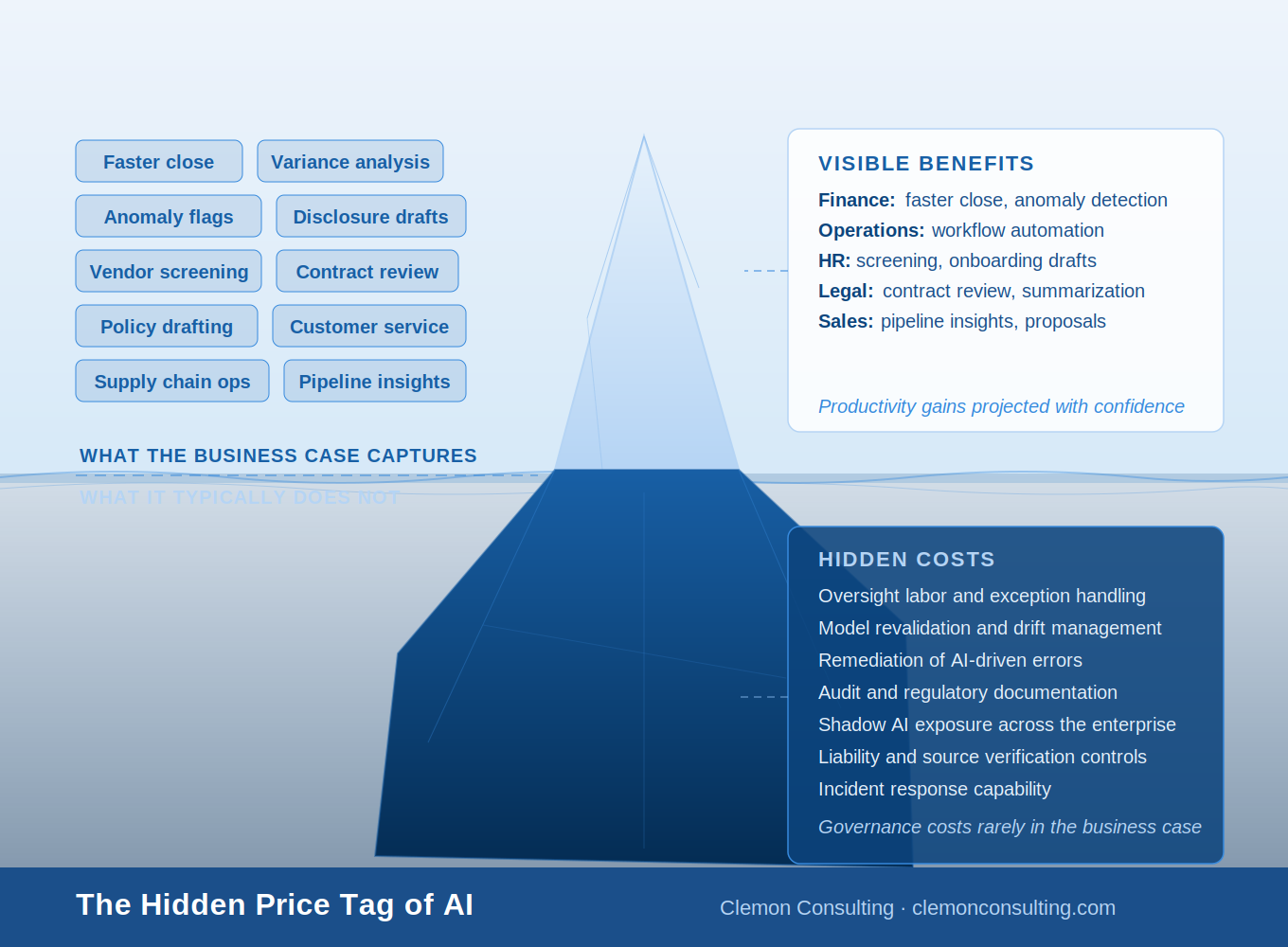
Every AI business case captures the efficiency gains with care and the governance costs with optimism. That asymmetry is where implementations go wrong.
Artificial intelligence is being adopted across finance, accounting, and enterprise operations at a pace that has outrun the governance frameworks designed to keep it in check. The productivity story is real. But every efficiency gain sits alongside a risk that rarely appears in the business case: oversight labor, model revalidation, remediation costs, audit documentation, and liability exposure that can dwarf the license fee.
The organizations that navigate AI adoption well are not those that move fastest. They are those that treat governance, human oversight, and control design as core inputs to the investment decision, not afterthoughts.
Read our full blog post for the key risks, the human-in-the-loop framework, and what it means when AI does not know it is wrong.
Getting Your Company Ready for a Sell-Side M&A Process
Selling a company depends far less on market timing than most founders expect, it depends almost entirely on preparation.
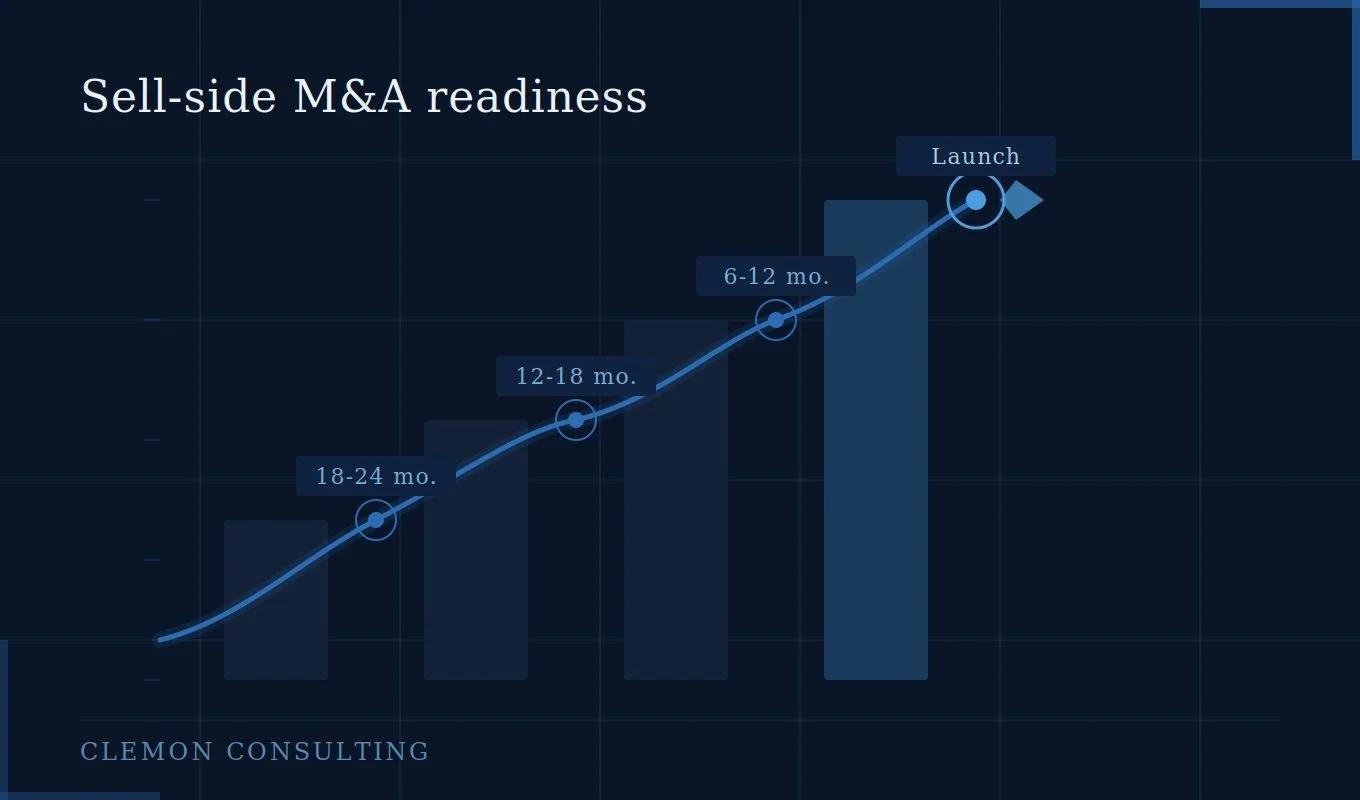
This post outlines what sell-side readiness actually requires: a preparation timeline that begins twelve to twenty-four months before launch, the six key dependencies that determine whether a company enters a process from strength or vulnerability, and the value drivers that sophisticated buyers scrutinize most closely.
Topics covered include clean audited financials, seller-initiated Quality of Earnings, revenue quality and documentation, management depth, legal and IP hygiene, and tax structure and closes with a practical readiness checklist across financial, commercial, legal, and operational dimensions.
The central argument: the companies that achieve the best outcomes are not necessarily the ones with the highest revenue or fastest growth, they are the ones that arrive prepared.
Key Changes to Disaggregated Financial Reporting, with Practical Examples: Understanding ASC 220-40
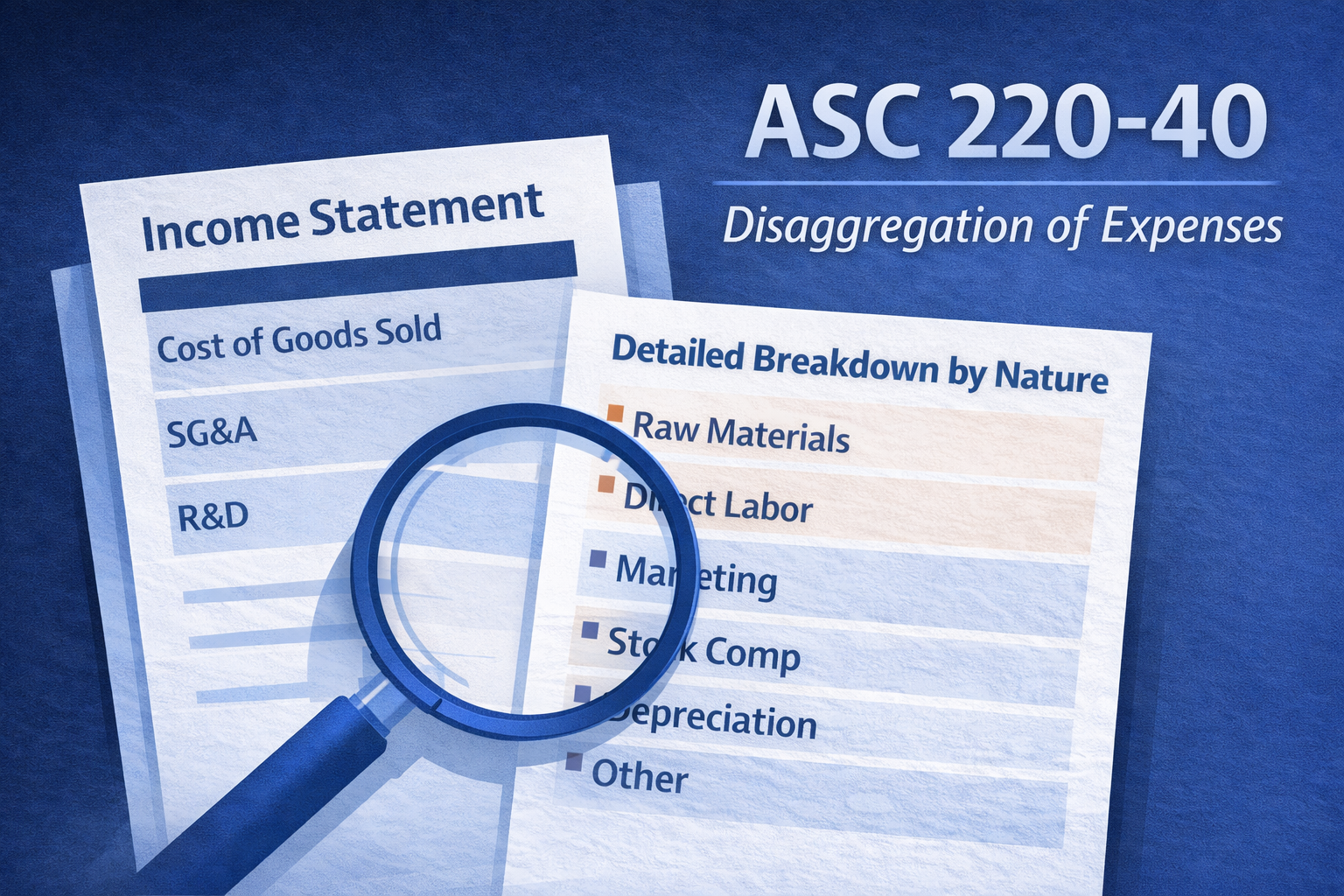
ASC 220-40 marks a meaningful shift in financial reporting, requiring companies to move beyond high-level expense categories and provide a more transparent view into what’s really driving their cost structure. Where financial statements once grouped expenses into broad buckets like cost of goods sold or SG&A, stakeholders will now expect a clearer breakdown of underlying components such as labor, materials, depreciation, and other key inputs.
This change is not just about compliance—it’s about clarity. Investors, lenders, and operators alike benefit from a more detailed understanding of how a business allocates its resources and where margin pressure or efficiency gains truly exist. For many organizations, ASC 220-40 will surface insights that were previously buried in aggregated reporting, ultimately leading to better decision-making and more informed conversations around performance.
As companies prepare for adoption, those that take a proactive approach—aligning systems, refining their chart of accounts, and enhancing internal reporting—will be best positioned to turn this new standard into a strategic advantage rather than a last-minute reporting exercise.

2026 Corporate Fundraising Environment in the U.S.: Trends in Technology, Software & Life Sciences
The U.S. corporate fundraising environment in 2026 is defined by concentration, selectivity, and strategic capital deployment. Across technology, software, and life sciences, investors are backing fewer companies — but writing larger checks for those that demonstrate clear differentiation, strong fundamentals, and long-term scalability. Artificial intelligence, deep tech, and clinically validated innovation continue to attract outsized attention, while traditional growth narratives face higher scrutiny.
As capital providers raise expectations around execution, profitability, and strategic fit, companies must adapt their fundraising approach to align with how investors are deploying capital today. Understanding these dynamics is now essential for founders and executives preparing for their next raise in an increasingly competitive market.

Enterprise Risk Management: A Leadership Imperative in Today’s Uncertain Environment
In today’s fast-changing business landscape, disruption is inevitable—but unpreparedness doesn’t have to be. Enterprise Risk Management (ERM) has evolved from a compliance obligation into a strategic capability that empowers leaders to anticipate uncertainty, make informed decisions, and protect long-term value.
For executives, effective ERM isn’t about avoiding risk—it’s about enabling intelligent risk-taking. By integrating risk management into strategic planning, leveraging data and analytics, and building a culture of accountability, organizations can turn volatility into opportunity and resilience into a competitive edge.
Clemon Consulting helps leadership teams achieve exactly that—transforming ERM from a checklist into a cornerstone of confident, forward-looking strategy.

Success in Business Is Not for the Faint of Heart…
Success in business isn't for the faint of heart—especially at the venture capital and private equity stages. The pressure is higher, the runway shorter, and the expectations sharper. At this level, execution must be precise, leadership must be decisive, and adaptability is no longer optional. It's not about having a good idea—it's about building a company that can scale, evolve, and outperform in an unforgiving market. Those who succeed don’t just manage the intensity—they lead through it.



Outsourcing Technical Accounting Support: A Strategic Advantage for Modern Businesses
There are appropriate circumstances and specific situations where outsourcing technical accounting is most beneficial.

