
Key Changes to Disaggregated Financial Reporting, with Practical Examples: Understanding ASC 220-40
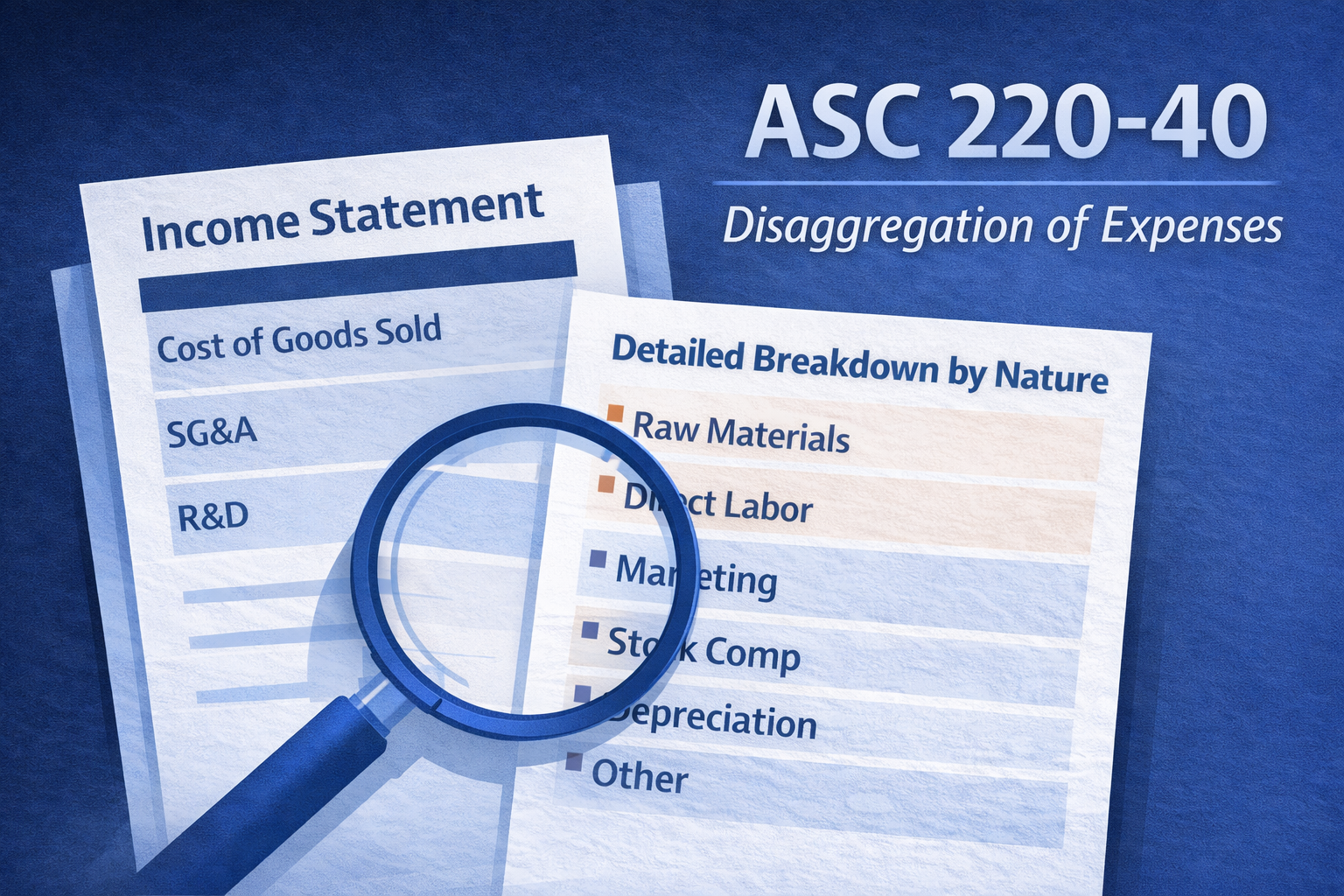
ASC 220-40 marks a meaningful shift in financial reporting, requiring companies to move beyond high-level expense categories and provide a more transparent view into what’s really driving their cost structure. Where financial statements once grouped expenses into broad buckets like cost of goods sold or SG&A, stakeholders will now expect a clearer breakdown of underlying components such as labor, materials, depreciation, and other key inputs.
This change is not just about compliance—it’s about clarity. Investors, lenders, and operators alike benefit from a more detailed understanding of how a business allocates its resources and where margin pressure or efficiency gains truly exist. For many organizations, ASC 220-40 will surface insights that were previously buried in aggregated reporting, ultimately leading to better decision-making and more informed conversations around performance.
As companies prepare for adoption, those that take a proactive approach—aligning systems, refining their chart of accounts, and enhancing internal reporting—will be best positioned to turn this new standard into a strategic advantage rather than a last-minute reporting exercise.